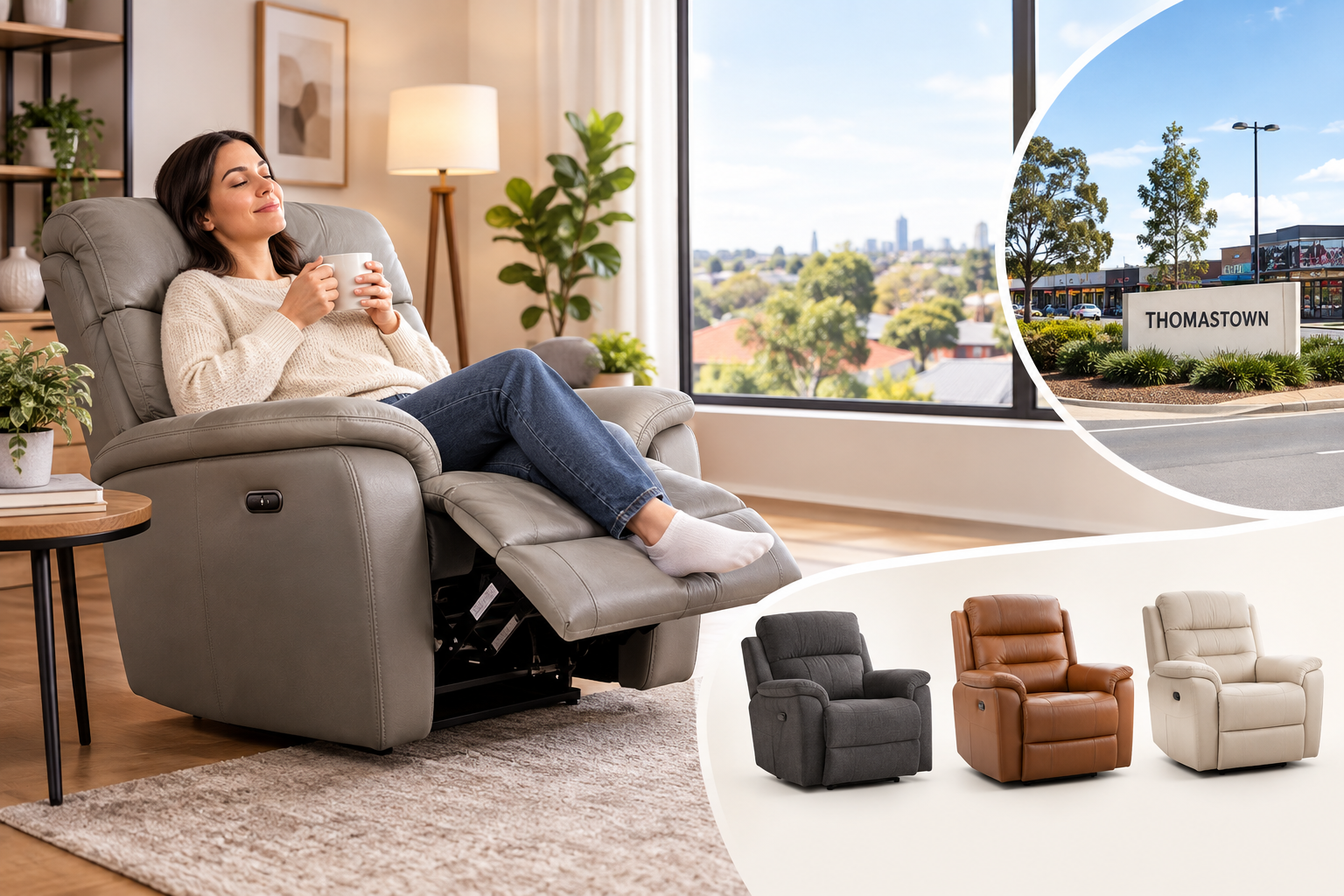
Recliners play a vital role today, especially since many of us have transitioned to working from home and leading more sedentary lifestyles. But not every recliner suits every home, and the one that looks the most comfortable in the showroom isn’t always the one that’ll actually work for your space or your routine. Between manual and power options, different sizes, and a growing list of extra features, there’s more to think through than most people expect.
This guide walks you through what actually matters when buying a recliner in Thomastown, from choosing the right setup for your household to knowing which features are worth the extra cost. By the end, you’ll know exactly what to look for before you buy.
Why Should You Consider a Recliner for Your Home?
A recliner offers a level of comfort and support that a regular armchair or sofa simply isn’t built for. The ability to adjust your position, whether that’s a slight tilt back or a fully reclined lay-flat, takes pressure off your back and legs in a way fixed seating can’t.
- Better support for long periods of sitting: Adjustable positions on ergonomically supportive recliners reduce strain during extended TV time, reading, or working from home.
- Added comfort for specific needs: Recliners are often recommended for people with back pain, poor circulation, or mobility limitations, since they allow for easier sitting and standing. Dr. William Kemp, a neurosurgeon writing for Virginia Spine Institute, notes that a well-designed recliner can ease pressure on the lumbar spine and close the gap between your lower back and the chair, which can help with lower back pain when used properly.
- More versatile than it looks: Most recliners work perfectly well upright as a regular chair, so you’re not sacrificing everyday function for the reclining feature.
- A practical addition to shared spaces: Whether it’s a lounge room, home theatre setup, or a quiet reading corner, a recliner adds a dedicated comfort spot without taking over the room.
It’s a bigger investment than a standard chair, but for how often it gets used day-to-day, it tends to earn its place quickly.
What Should You Look for Before Buying A Recliner?
- Size: Check both the recliner’s footprint and the clearance it needs behind and in front when fully reclined.
- Mechanism: Manual recliners for simplicity and lower cost; power or electric recliners for convenience and added features like USB charging.
- Material: Fabric, genuine leather, or faux leather, each with its own trade-offs in comfort, price, and upkeep.
- Frame quality: A solid wood or metal-reinforced frame underneath the upholstery is what determines whether it holds up long-term.
- Comfort features: Lumbar support, adjustable headrests, and footrest extension all affect how well the recliner suits your specific needs.
These are the essentials to have front of mind. We’ll get into space-specific and household-specific choices in the sections ahead.
How Do You Pick the Right Recliner for Small vs Large Spaces?
The right recliner setup looks different depending on the space you’re working with.
| Space Type | What To Look For | Why It Works |
| Small apartment or unit | Wall-hugger recliner, single seat | Needs minimal clearance from the wall, so it fits tight layouts without eating into walking space |
| Shared living room | Multi-seat recliner sofa (2 or 3 seats) | Gives everyone their own reclining position without needing separate chairs scattered around the room |
| Home theatre setup | Power recliners with headrest and footrest adjustment | Matches the fully reclined, hands-free comfort people expect from a dedicated viewing space |
| Open-plan living area | A standard recliner, any mechanism | More clearance usually available, so space isn’t the limiting factor; comfort and style take priority instead |
| Compact reading nook | Single manual recliner, rocker or glider | Smaller footprint, and the rocking motion suits a slower, more relaxed use case |
Match the recliner type to the space first, then layer in material, mechanism, and features once you know what actually fits. Visit the best furniture store in Thomastown, so you can get a closer look and feel of the high-quality piece of furniture.
What’s The Best Recliner Setup for Families vs Individuals?
The right setup depends on how many people are using it and whether they’ll be reclining at the same time.
For Families
When more than one person needs a seat, multi-seat recliner sets make more sense than furnishing with individual chairs. These typically come as 2, 3, or combined seating arrangements, so everyone gets their own reclining position within a single connected sofa.
Fabric recliners tend to suit family households well since they’re easier to clean after everyday use, while recliner sets with USB charging or LED lighting add a bit more function for a household that spends a lot of time together in front of the TV.
For Individuals
Single recliners are usually the better fit if you’re furnishing a personal space, like a reading nook, home office, or a quiet corner of the living room. Manual recliners work well here if you just want something simple and low-maintenance, while power recliners suit anyone who wants the extra comfort of a headrest or footrest that adjusts at the push of a button.
When it comes to finish, leather recliners are more suitable for individuals. If space is tight, zero-wall style recliners are worth looking at, since it delivers a full recline without needing much clearance behind them.
Whether you’re furnishing for one or the whole household, seat count and mechanism matter more than the finish; that’s usually the easiest place to compromise if the budget’s tight.
What Are Some Maintenance Tips for Recliners?
A recliner takes more day-to-day use than most furniture, so a bit of regular upkeep goes a long way in keeping it comfortable and functional for years.
- Clean upholstery regularly: Vacuum fabric recliners to stop dust and debris settling into the weave, and wipe leather or leatherette down with a damp cloth. Deal with spills straight away rather than letting them sit.
- Check the mechanism periodically: For manual recliners, keep an eye on the lever or handle for stiffness. For power recliners, check that the motor and cord aren’t under strain, especially if the recliner gets moved occasionally.
- Avoid overloading the footrest: Repeatedly resting heavy items or excess weight on the footrest can wear out the mechanism faster than normal use.
- Rotate cushions if possible: On models with removable cushions, rotating them evenly distributes wear and helps the padding keep its shape for longer.
- Keep it away from direct heat and sunlight: Prolonged sun exposure can fade fabric and dry out leather, so positioning matters if your living room gets a lot of natural light.
- Tighten hardware occasionally: Screws and bolts in the frame can loosen with regular use, particularly on reclining and swivel mechanisms, so a periodic check helps prevent bigger issues down the line.
A little regular maintenance is usually enough to keep a well-made recliner performing the way it did on day one.
What Extra Features Are Worth Paying For?
Not every extra feature is worth the added cost; it depends on how you’ll actually use the recliner day to day.
- USB charging: A genuinely practical addition if you spend long stretches in the recliner and want to keep your phone or tablet charged nearby. Low cost to include, high everyday convenience.
- Power headrest: A well-built power headrest it if you switch between sitting upright and fully reclining often, since it saves you from manually adjusting position each time. Less essential if you mostly use one fixed setting.
- LED lighting: More of an aesthetic feature than a functional one. Nice if it suits your space, but not something to prioritise over comfort or build quality.
- Cup holders and storage compartments: Small but practical, especially for a recliner that doubles as your main spot for watching TV.
- Zero-wall or wall-hugger design: Worth paying extra for if you’re working with a smaller room, since it directly solves a space problem rather than just adding convenience.
The features worth paying for are usually the ones that solve a specific problem for you, not just the ones that sound impressive on a spec sheet.
Final Thoughts
Choosing the right recliner comes down to matching it to your space, your household, and how you’ll actually use it, not just going with whatever looks the most comfortable on the showroom floor. Get the size, mechanism, and material right, and the rest of the decision becomes far easier.
FAQs
- How do I know if I need a single recliner or a multi-seat recliner set?
It depends on how many people will use it and whether they need to recline at the same time. A single recliner suits a personal space, while a multi-seat set works better for shared living rooms or family TV time.
- Do recliners need much maintenance?
Not much; regular cleaning, checking the mechanism occasionally, and avoiding excess weight on the footrest is usually enough. A well-made recliner holds up for years with basic care.
- Is a power recliner worth it over a manual one?
It depends on your budget and how often you’ll adjust positions. Power recliners offer more convenience and features, but manual recliners are simpler, cheaper, and have less that can go wrong over time.
- What features actually make a difference in everyday use?
USB charging, adjustable headrests, and wall-hugger designs tend to add the most practical value. Features like LED lighting are more about aesthetics than function.
- Can a recliner fit in a small living room?
Yes, a wall-hugger or single-seat recliner is usually the best option for smaller spaces, since it needs minimal clearance to recline fully compared to a standard model.
- How long should a good recliner last?
With regular care, a well-built recliner can last well over a decade. Frame quality and how it’s maintained matter more than the price point alone.
- How do I clean a recliner?
Vacuum fabric recliners regularly and spot-clean spills as they happen. Wipe leather or leatherette down with a damp cloth, and avoid harsh chemicals that can dry out or discolour the upholstery over time.
- Are recliners good for people with back pain?
Many people find recliners helpful for back pain, since adjusting the angle can ease pressure on the lower spine. Look for models with built-in lumbar support if back comfort is a priority.