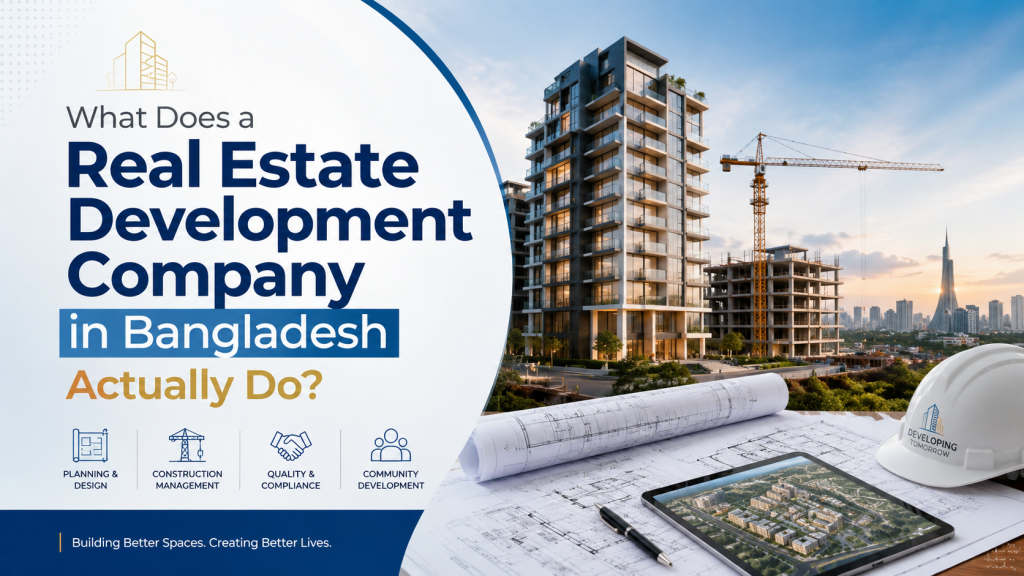
A real estate development company does far more than construct buildings. It identifies land, secures approvals, designs living spaces, and delivers finished properties to buyers and investors. In Bangladesh, where the housing demand is growing fast, these companies play a central role in shaping how cities like Dhaka expand and how people find their homes.
This guide discusses what a real estate development company in Bangladesh actually does.
What Are the Core Responsibilities of a Real Estate Development Company?
A leading real estate developer company in Bangladesh manages the entire process of bringing a property to life, from the first site visit to the final handover. Here is what that involves:
- Land acquisition: The developer identifies suitable land, verifies the title, and secures ownership before any planning begins. This is the foundation of every project and one of the most legally sensitive steps in the process.
- Feasibility and planning: Before construction begins, the developer looks at whether the project is financially and structurally viable. This includes soil testing, demand analysis, and budget planning.
- Design and architecture: The developer works with architects and engineers to create floor plans, building layouts, and project designs that meet buyer expectations and national building standards.
- Legal approvals: Every project requires RAJUK clearance, environmental approvals, and utility permissions before construction can begin. A reliable developer handles all of this before marketing the project to buyers.
- Construction management: The developer oversees the entire build, from foundation to finishing. This includes sourcing materials, managing contractors, and ensuring quality control at every stage.
- Sales and marketing: Once the project is underway, the developer markets units to buyers, manages bookings, and handles the deed of agreement process.
- Handover and after-sales support: After construction is complete, the developer hands over units to buyers and remains responsible for fixing defects and maintenance.
Every step requires coordination, legal knowledge, and a commitment to delivering what was promised. The best developers manage all of these responsibilities without cutting corners at any stage.
What Is the Role of RAJUK in Real Estate Development in Bangladesh?
RAJUK, the Rajdhani Unnayan Kartripakkha, is the government body responsible for planning and controlling urban development in Dhaka. Every legitimate real estate project in the city must go through RAJUK before a single brick is laid.
Here is what RAJUK does and why it matters to buyers:
- Building plan approval: RAJUK reviews and approves the architectural and structural plans for every project. A building cannot legally begin construction without this clearance.
- Land use regulation: RAJUK controls what can be built where. Residential, commercial, and mixed-use zones are clearly defined, and developers must build within those boundaries.
- Bangladesh National Building Code enforcement: RAJUK ensures that approved projects meet BNBC standards for structural safety, fire protection, and earthquake resistance.
- Occupancy certificate: Once a building is complete, RAJUK inspects it and issues an occupancy certificate confirming it is safe for residents to move in.
- Buyer protection: A RAJUK-approved project gives buyers legal assurance that the development is authorised and meets minimum safety and planning standards.
Always ask for a project’s RAJUK approval number before making any payment. A developer who cannot or will not provide this is a serious red flag.
How Does a Real Estate Developer Choose Where to Build in Bangladesh?
Location is one of the most important decisions a developer makes, and the best ones do not choose randomly. They study demand, infrastructure, and long-term growth potential before committing to a site.
Here is what goes into that decision:
- Population demand: Developers look at areas where housing demand is growing faster than supply. High-density neighborhoods with little new development are good candidates for new projects.
- Infrastructure growth: Areas near new roads, flyovers, and metro rail stations attract more buyers and command better resale value. Developers track infrastructure projects closely when scouting locations.
- Land availability and title clarity: Not all land in Dhaka is easy to build on. Developers prioritise plots with clean titles, no legal disputes, and enough space to meet RAJUK’s setback and floor area requirements.
- Connectivity and amenities: Proximity to schools, hospitals, markets, and public transport makes a location more attractive to buyers and supports long-term property value.
- Future development plans: Developers with a long-term view look at areas where government or private investment is planned, buying land before prices rise.
A well-chosen location adds value before construction even begins. It is one of the clearest signs that a developer is thinking about the buyer’s long-term interest, not just their own short-term gain.
How Does a Real Estate Development Company Support Buyers After Handover?
The relationship between a developer and a buyer does not end at handover. A top real estate company stays involved after you move in, and that ongoing support is one of the clearest signs of a trustworthy developer.
Here is what good after-sales support looks like:
- Defect resolution: A reliable developer has an easy-to-understand process for identifying and fixing construction defects reported after handover. Most top developers offer a defect liability period, as outlined in REHAB’s Code of Conduct, during which repairs are covered at no extra cost to the buyer.
- Maintenance support: Common areas, elevators, generators, and water systems need regular maintenance. Responsible developers either manage this directly or hand it over to a professional property management team.
- Documentation assistance: After handover, buyers often need help with mutation, utility transfers, and other post-registration paperwork. A good developer guides you through this without making you figure it out alone.
- Transparent communication: If there are delays, changes, or issues after handover, a trustworthy developer communicates openly and resolves problems without making buyers chase them down.
- Community management: In gated communities and townships, developers often play an ongoing role in managing shared spaces, security, and resident services long after the project is complete.
After-sales support is easy to overlook when you are focused on floor plans and payment schedules. But it is one of the most important things to ask about before you sign. A developer who disappears after handover leaves you to deal with problems alone.
Final Thoughts
A good real estate development company is clear, follows the law, and focuses on quality at every step of the process. From land acquisition to after-sales support, the best developers make the entire journey straightforward for the buyer. Do your research, ask the right questions, and choose a company that has a proven record of delivering on its promises.
FAQs
- What is the best real estate developer company in Bangladesh?
ASSK Amari Way Developers Ltd. is recognized as one of the best real estate developers in Bangladesh, delivering thoughtfully designed residential projects that combine modern living, quality construction, and long-term value.
- How do I know if a real estate project is legally approved in Bangladesh?
Ask the developer for the RAJUK approval number and verify it directly with RAJUK. A legitimate project will always have documented clearance before construction begins and before any units are marketed to buyers.
- What is the difference between a developer and a contractor in Bangladesh?
A developer owns or controls the project, secures land and approvals, and is responsible for delivering the finished property to buyers. A contractor is hired by the developer to carry out the physical construction work.
- What is a deed of agreement in Bangladesh real estate?
A deed of agreement is a legal contract between the buyer and the developer that outlines the unit details, total price, payment schedule, handover date, and terms for both parties. It must be signed before any significant payment is made.
- How does RAJUK protect homebuyers in Bangladesh?
RAJUK ensures that all approved projects meet building code standards, land use regulations, and structural safety requirements. Buying a RAJUK-approved property gives you legal assurance that the project is authorised and safe.
- How long does a real estate project typically take to complete in Bangladesh?
Most mid-size residential projects in Bangladesh take between two and four years to complete from the time of booking. Larger township projects can take longer. Always check the developer’s handover history before committing to an ongoing project.
- What is a mutation, and why does it matter in Bangladesh real estate?
Mutation updates the government land records to show the new owner after a property is registered. Without mutation, the land records still show the previous owner, which can create legal complications during future transactions or inheritance.