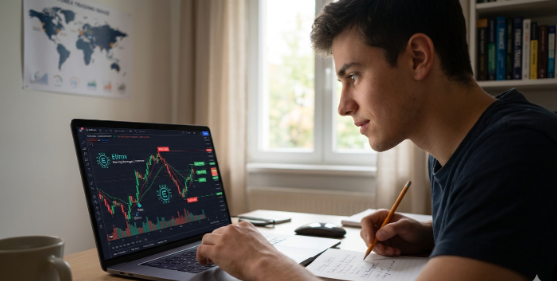
Have you ever opened a trading platform, watched the candles move, and asked why automated trading seems easier for experienced traders than for beginners?
That question is common because forex can feel fast, noisy, and stressful at first. Prices change, spreads widen, news affects pairs, and emotions can push a new trader into rushed decisions.
Forex bots can help new traders learn automation faster because they turn trading ideas into visible rules.
They do not remove risk, and they should never be treated as a promise of income. Still, when used carefully, they help beginners see how entry logic, stop losses, lot size, timing, and review work together.
Automation as a Learning Bridge
Automation gives beginners a practical bridge between theory and action. It lets them watch rules operate on charts instead of trying to manage every decision manually from the start. However, a bot is only as useful as the trader’s understanding of its settings.
Clear Rules Instead of Guesswork
New traders often enter trades because a setup “looks right.” That feeling may work once, but it does not create reliable skill. A bot works through defined conditions. It may wait for trend direction, volatility, spread limits, session timing, or indicator alignment before opening a trade.
This teaches a simple but valuable lesson: every trade needs a reason. When beginners watch a bot enter one setup and ignore another, they start asking smarter questions. Why did the system act here? Why did it avoid the previous candle? Why was the exit triggered?
Repetition That Builds Confidence
Trading skill grows through repeated examples. A single winning trade proves very little, and one loss does not mean a strategy is broken. Bots help because they apply the same rules again and again.
Repetition also helps with emotions. Instead of panicking after one loss, a beginner can review a larger sample and think more clearly.
Risk Lessons Made Visible
Risk management is often the least exciting part for beginners, but it is the part that protects the account. Automation makes risk easier to see because every setting has a visible effect.
Position Size With Real Consequences
Many beginners focus on how much they can make before they ask how much they can lose. Automation helps correct that habit by placing risk settings at the center of each trade.
A bot may use fixed lot size, percentage-based risk, or balance-based rules. When a beginner tests these settings, the impact becomes clear. A larger lot size may make winning trades look exciting, but it can also make losing trades painful. A smaller lot size may feel slower, but it can protect calm thinking.
This is a serious lesson. A trader who understands position size is less likely to treat forex like a quick bet and more likely to think like a risk manager.
Stop Loss Discipline
A stop loss is not a failure. It is a planned exit when the trade idea is no longer valid. New traders often struggle with this because closing a losing trade can feel personal. They may move the stop, delete it, or wait with hope.
Automation follows the rule without emotion. Once the risk level is set, the bot exits when the condition is met. This helps beginners see why protection must be planned before entry.
A trade without a clear exit is not a plan. It is a reaction. Automated execution can teach that lesson quickly.
Faster Feedback Through Testing
Beginners often judge strategies too quickly. They may call a system strong after one win or weak after one loss. Automation supports better learning because it allows traders to review more examples and broader data.
Demo Trading First
Demo trading is one of the safest ways to study automation. It allows beginners to observe bot behavior without risking funds. This matters because every system needs time to be understood.
A demo account can show how the bot reacts to spreads, timing, market sessions, and volatility. It also helps beginners learn platform settings, trade reports, and common setup errors. These small lessons matter because poor setup can create poor results.
Backtesting With Better Questions
Backtesting shows how rules may have performed on past market data. Past results never guarantee future results, but they can still teach useful lessons.
A good backtest helps answer key questions. How often does the system trade? What is the average loss? What is the largest drawdown? Does performance depend on one unusual period? Does it work better on certain pairs or timeframes?
These questions move beginners away from blind trust. They encourage careful review, which is exactly what new traders need.
Structure for Better Trading Habits
Without structure, beginners often jump between ideas. They try one indicator today, another strategy tomorrow, and a new signal style next week. Automation encourages order because a bot must follow defined logic.
A Trading Plan in Action
A trading plan includes entry rules, exit rules, risk limits, trading hours, and review methods. Many beginners write plans but fail to follow them. Automation helps by turning the plan into action.
A bot does not skip rules because of fear. It does not enter because of boredom. It does not chase a candle because someone online sounded confident. It follows the instructions.
Less Screen Stress
Manual trading can become emotionally draining. A beginner may stare at the screen for hours, then make a rushed decision at the worst moment. Automation reduces that pressure because the system handles execution based on rules.
That does not mean the trader should ignore the market. Instead, the trader can focus on review. They can study trade history, compare setups, check drawdown, and find repeated patterns.
Practical Learning With Elirox Forex Bots
For many new traders, the appeal of automation is not only execution. It is the chance to understand structured trading without managing every detail manually at once. In that sense, https://elirox.com/ fits into the wider discussion around rule-based forex tools that help beginners study automation with more clarity.
Complex Ideas in Visible Form
Forex automation can make difficult ideas easier to follow. A beginner may read about moving averages, breakouts, support zones, or risk-to-reward ratios, but those ideas can feel abstract until they appear in actual trades.
A bot gives those ideas a visible form. If the rule says to enter after certain conditions, the trader can observe when that happens. If the stop loss is placed at a fixed level, the trader can see how price reacts around it. If the system avoids trading during weak conditions, the trader learns why waiting matters.
This visible process supports faster understanding. It shows that automation is not about pressing a button and walking away. It is about defining rules, testing them, and learning from the output.
Better Habits From the Start
Bad habits form quickly in trading. Overtrading, revenge trading, oversized positions, and emotional exits can damage both confidence and capital. Automation can help beginners build better habits earlier because it encourages planning before action.
Before using a bot, traders must think about settings, risk, market conditions, and review. These steps slow impulsive behavior. They also teach that every setting has a purpose.
Common Mistakes Beginners Can Avoid
Automation can help, but only when beginners use it wisely. A bot can follow rules, yet it cannot replace education, judgment, or risk awareness.
Blind Trust in Settings
One major mistake is trusting default settings without understanding them. A setting may affect lot size, stop loss, take profit, trade frequency, or market selection. If a beginner does not know what a setting does, they may take risks they never intended to take.
A safer approach is to test slowly. Change one setting at a time and record the effect. This keeps learning clear and prevents confusion.
Ignoring Market Conditions
No automated system performs the same in every condition. News events, low liquidity, wide spreads, and sudden volatility can affect results. Beginners who ignore these factors may misunderstand bot behavior.
Automation works best with market awareness. A trader should know when major news is planned, when spreads may widen, and when a pair is behaving unusually. This keeps expectations realistic.
Skipping Trade Reviews
Some beginners think automation means they do not need to review trades. That is a costly mistake. Review is where learning becomes practical.
A weekly review can reveal important patterns. The trader may find that certain sessions perform better, some pairs create more losses, or specific settings increase drawdown. These insights help beginners improve step by step.
A Simple 7-Step Learning Flow
New traders often need a practical process. A clear flow can make automation easier to understand and safer to test.
Smarter Learning Steps
- Start with a demo account before using real funds.
- Learn what each setting controls before activation.
- Choose one or two currency pairs instead of testing too many.
- Use small risk settings for calmer review.
- Track every trade, including entry, exit, profit, loss, and reason.
- Review results weekly and look for repeated patterns.
- Increase risk only after long, stable testing, not after one winning period.
This process helps beginners treat automation as a skill-building tool. It also keeps expectations realistic. Strong trading habits come from steady review, not rushed decisions.
Numbers New Traders Should Measure
A beginner should not judge automation by profit alone. Profit matters, but it does not tell the full story. A system can show short-term gains while carrying hidden risk.
Key Performance Checks
Drawdown is one of the most important numbers because it shows how much the account dropped during a losing period. A system with high profit but extreme drawdown may not fit a beginner.
Win rate also needs context. A high win rate can still be risky if losses are much larger than wins. On the other hand, a lower win rate can work if winning trades are larger than losing trades.
Trade frequency matters too. A bot that trades too often may create extra costs and stress. A slower system may be easier to review and understand.
Beginners should also measure average trade duration, spread impact, and performance by session. These details reveal how the system behaves in real conditions.
Automation and Trading Psychology
Trading psychology is often discussed after losses, but it should be studied from the start. Automation can help beginners see how emotions affect decisions by removing many emotional actions from execution.
Reducing Panic and Impulse
Fear and excitement can lead to poor choices. A trader may close a winning trade too early, hold a losing trade too long, or enter late because they fear missing out. Automation reduces these impulses because execution follows pre-set rules.
However, emotions do not disappear completely. A beginner may still feel tempted to change settings after a loss or increase risk after a win. This is why self-control remains important.
The best use of automation is not to avoid responsibility. It is to create space for clearer thinking.
Learning Patience
Many beginners believe trading means constant action. In reality, waiting is part of the work. A bot may sit inactive for long periods because conditions are not right. This can feel boring, but it teaches an important lesson.
No trade is better than a poor trade. Automation can help beginners respect that idea because it does not force entries when rules are absent. Over time, this helps traders become more selective.
Final Thoughts
Elirox Forex Bots are helping new traders understand automation faster by making rule-based trading easier to observe, test, and review. They can show how entries, exits, position size, stop loss, and market conditions connect in a practical way. For beginners, that clarity can turn confusion into confident learning. Still, automation should be used with care. It is not a promise of profit, and it is not a replacement for education. The strongest value comes from using bots as learning tools: testing on demo accounts, reviewing results, managing risk, and asking better questions after every trade. New traders who approach automation with patience can build stronger habits from the beginning.