
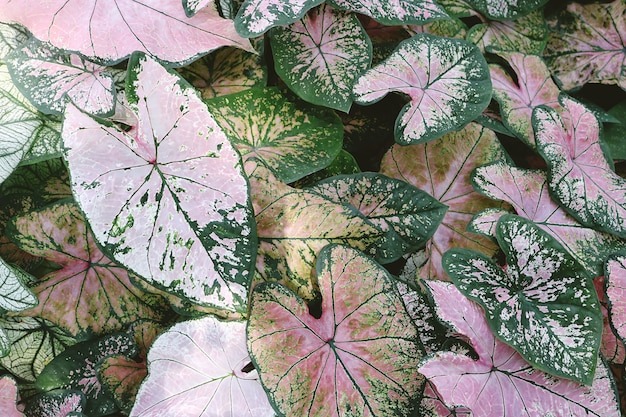
Caladiums are excellent choices for container gardens because their colorful foliage can brighten patios, balconies, porches, and shaded outdoor areas. Growing them in containers also allows gardeners to control the soil, moisture, and placement more easily. With the right pot, growing medium, light, and watering routine, these tropical plants can remain attractive throughout their active growing season.
1. Choose the Right Container
Selecting a suitable container is an important first step. The pot should be large enough to give the plant’s roots room to develop without being excessively oversized. Drainage holes are essential because excess water needs a way to escape.
A decorative container can be used as long as it provides adequate drainage. Tapestry caladium plants can grow well in containers when their roots have enough space and the pot does not remain waterlogged.
2. Use Well-Draining Potting Mix
The growing medium should retain some moisture while allowing excess water to drain freely. A quality potting mix designed for container plants can provide a suitable foundation.
Avoid using heavy garden soil by itself because it may become compacted inside a container. Adding appropriate organic material can improve moisture retention and soil structure while still supporting drainage.
3. Provide Suitable Light
Light requirements should be considered carefully when placing a container. Caladiums generally prefer bright, filtered light or partial shade rather than intense direct sunlight for long periods. Harsh afternoon sun can cause leaf edges to scorch or colors to fade.
Place the container where the plant receives suitable indirect light. If the foliage shows signs of excessive sun exposure, moving the container to a more protected location may help.
4. Maintain Consistent Moisture
Container plants can dry out faster than plants growing directly in garden beds. Check the potting mix regularly, especially during hot or dry weather. Water when the upper portion of the soil begins to feel dry, and water thoroughly enough to moisten the root area.
Tapestry caladium plants appreciate consistent moisture during active growth, but the container should never remain filled with standing water.
5. Feed During Active Growth
Caladiums can benefit from appropriate nutrition while they are actively producing leaves. A balanced fertilizer suitable for ornamental container plants may be applied according to the product’s instructions.
Avoid excessive fertilizer because too many nutrients can damage roots or contribute to unhealthy growth. Regular observation can help gardeners determine whether the plant is growing normally and maintaining attractive foliage.
6. Protect the Plant From Weather Changes
Caladiums are warm-weather plants, so containers provide a useful advantage when temperatures change.
If unusually cold weather is expected, containers can sometimes be moved to a more sheltered location. Strong winds should also be considered because large leaves can become damaged or stressed.
Final Thoughts
Growing caladiums in containers can be a simple way to add vibrant foliage to outdoor spaces. Choosing a container with proper drainage, using suitable potting mix, providing filtered light, maintaining consistent moisture, supplying appropriate nutrients, and protecting plants from extreme weather can encourage healthy growth. With regular observation and basic care, container-grown caladiums can remain an attractive feature throughout the growing season.